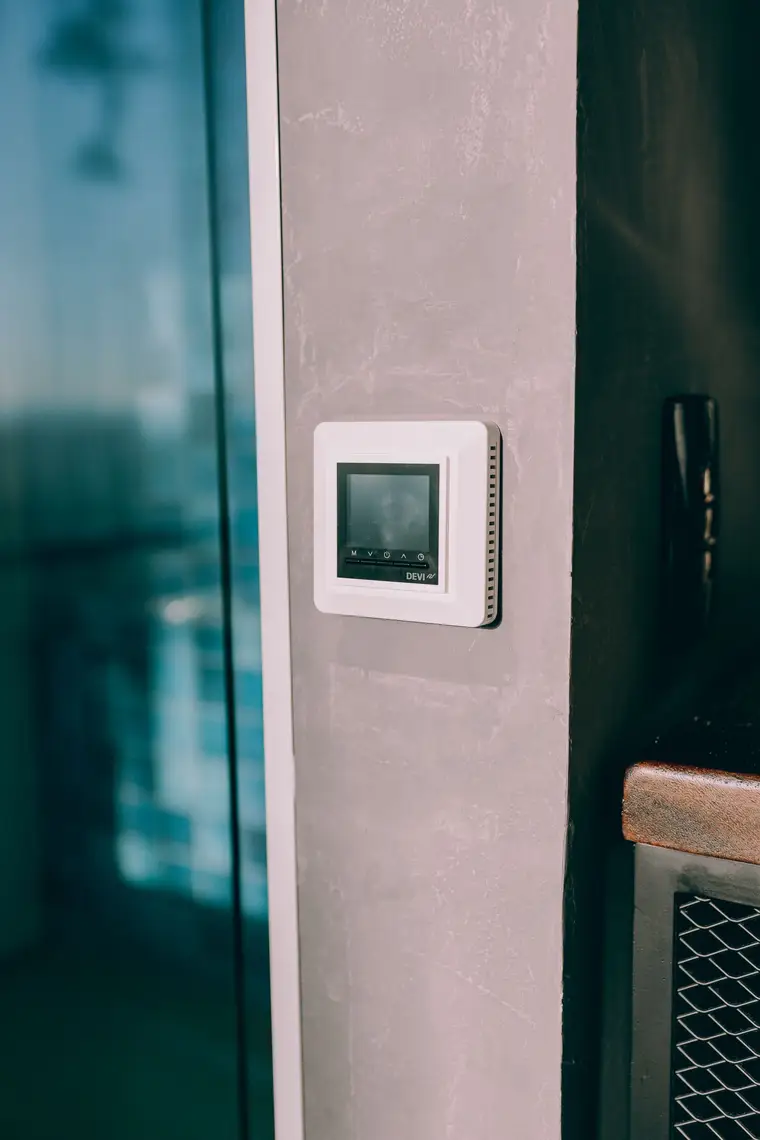
A smart thermostat can follow a schedule, adjust when nobody’s home, and let you change the temperature from bed or from work. Most homes can use one – but it’s worth checking your system first.
Systems that usually work
- Gas or propane furnaces with central air (the most common setup around here)
- Heat pumps, including ones with backup electric or gas heat – the thermostat just needs to be set up for it
- Many boilers with low-voltage controls
Systems that usually don’t
Electric baseboard heaters and wall heaters often use line-voltage thermostats (120 or 240 volts). Standard smart thermostats are low-voltage and are not compatible – there are special line-voltage smart models instead. Line-voltage thermostats are a shock hazard, so they’re a job for an electrician.
The C-wire question
Smart thermostats need steady power. That usually comes from a C-wire (common wire) in the thermostat cable. Many older homes don’t have one connected. The fix is often simple – an unused wire in the cable can be connected at the furnace, or a power adapter can be added – but guessing can lead to a thermostat that keeps rebooting.
Quick check: take the cover off your current thermostat and take a photo of the wires and labels. Text it to us at 567-376-5863 and we’ll tell you which models will work.
Our smart thermostat install is $89, including checking compatibility, wiring, setup and a schedule that fits your day. See smart home services.